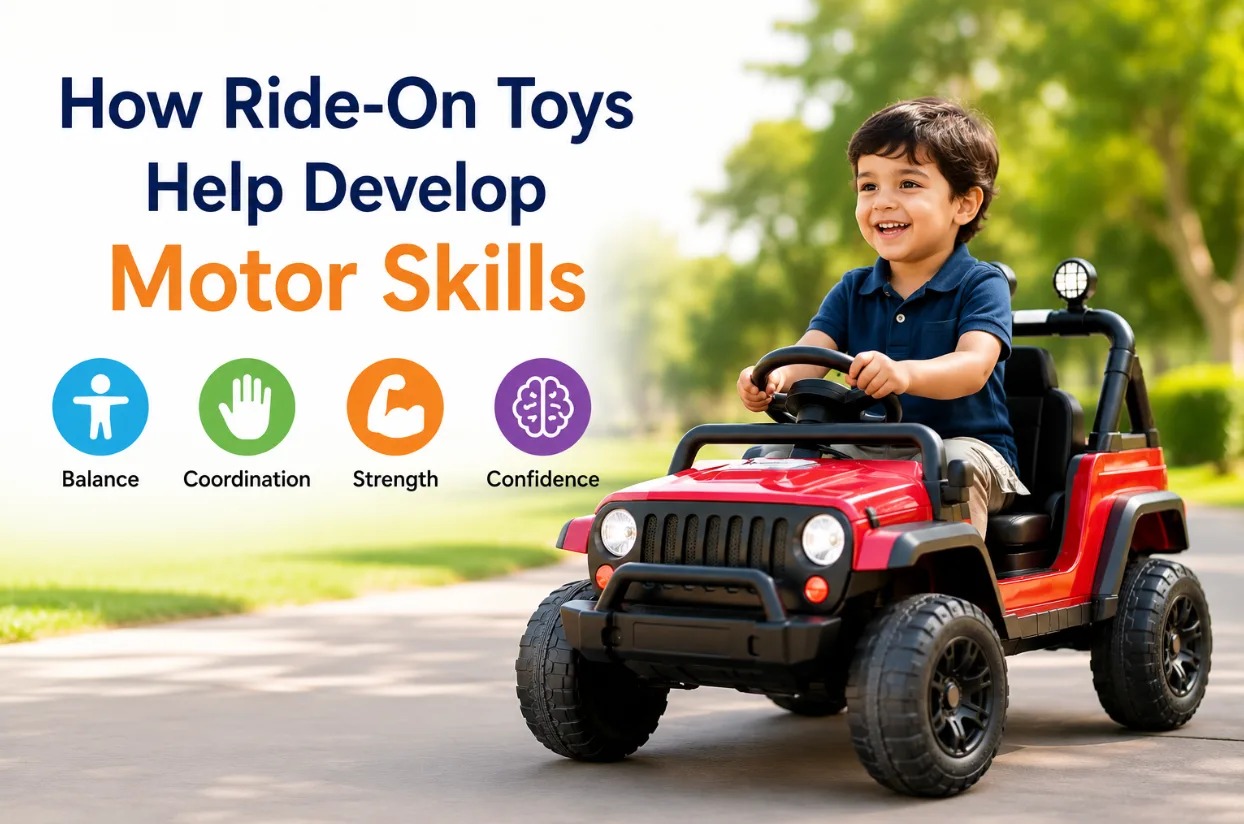
Watching a toddler steer their first battery-operated car across the living room floor might look like simple fun — but underneath that giggling and gear-grinding is some serious developmental work happening. Ride-on toys aren't just entertainment; they're one of the most effective, screen-free ways to help young children build the physical and cognitive skills they'll rely on for years to come.
In this guide, we'll break down exactly how ride-on toys support motor development, which skills they target, and how to choose the right one for your child's stage of growth.
What Are Motor Skills, and Why Do They Matter?
Motor skills fall into two broad categories:
Gross motor skills – the big movements that involve large muscle groups, like walking, running, balancing, pedaling, and steering.
Fine motor skills – the smaller, precise movements involving hands and fingers, like gripping a handlebar, pressing buttons, or turning a key.
Both types of skills are foundational. They affect everything from a child's ability to run and play with friends to their handwriting and hand-eye coordination later in school. Ride-on toys, as it turns out, engage both categories at once.
How Ride-On Toys Build Gross Motor Skills
1. Balance and Core Strength
Sitting upright on a moving vehicle — even a slow-moving one — requires constant, subtle core engagement. Children learn to shift their weight, correct their posture, and stay steady, which strengthens the core muscles that support balance in everyday movement.
2. Leg Strength and Coordination
For pedal-powered or foot-to-floor ride-ons, kids push, pedal, and propel themselves forward. This builds leg strength and teaches the brain and muscles to coordinate repetitive movement — a precursor to skills like running and jumping.
3. Spatial Awareness
Steering around furniture, other kids, or obstacles in the yard teaches children to judge distance, width, and space. This spatial reasoning carries over into activities like navigating playgrounds, riding bicycles, and even early sports.
How Ride-On Toys Build Fine Motor Skills
1. Hand-Eye Coordination
Turning a steering wheel while watching where the vehicle is headed trains the eyes and hands to work together in real time — a skill that later supports writing, drawing, and catching a ball.
2. Grip Strength and Control
Gripping handlebars, pressing pedals, and pushing buttons (horns, lights, gear switches) all build the small muscles in the hands and fingers, laying groundwork for tasks like holding a pencil or using cutlery.
3. Bilateral Coordination
Many ride-on toys require using both hands and both feet together — one hand steering while the other reaches for a button, for example. This "cross-body" coordination is a key marker of healthy motor development.
Cognitive and Social Benefits That Come Along for the Ride
Motor development doesn't happen in isolation — ride-on toys also support:
Decision-making: Choosing when to turn, stop, or speed up builds early executive function.
Confidence and independence: Mastering a new skill, like steering in a straight line, gives children a real sense of accomplishment.
Social play: Taking turns, "driving" alongside siblings or friends, and imaginative play (pretending to run errands or go on adventures) build social-emotional skills alongside physical ones.
Choosing the Right Ride-On Toy for Motor Development
Not all ride-on toys support the same skills, so it helps to match the toy to your child's stage:
Age Group | Best Type of Ride-On | Key Skills Developed |
1–2 years | Foot-to-floor push cars (no pedals) | Balance, leg strength, early steering |
2–4 years | Pedal-powered trikes or simple battery cars | Coordination, leg strength, steering control |
4–6 years | Battery-operated cars/jeeps with steering wheel and pedals | Hand-eye coordination, spatial awareness, bilateral coordination |
6–8 years | Higher-speed battery vehicles with more controls (lights, horn, gears) | Advanced coordination, decision-making, fine motor control |
A Few Tips for Maximizing the Benefits
Let them steer, don't steer for them. Even if it means a few bumps into furniture, self-directed control is where the real skill-building happens.
Choose outdoor time when possible. Uneven ground (grass, pavement) adds an extra balance challenge that flat indoor floors don't offer.
Rotate toy features as they grow. A toy with buttons, horns, and gear options gives older kids more fine motor opportunities than one with just a steering wheel.
Supervise, but don't hover. Kids build confidence faster when they're allowed to problem-solve steering and stopping on their own, with a parent nearby for safety.
The Bottom Line
Ride-on toys offer something rare in a child's toy box: a single activity that builds gross motor strength, fine motor precision, spatial reasoning, and confidence — all through unstructured, screen-free play. Whether it's a simple push car for a toddler or a full-featured battery-operated jeep for a six-year-old, the time spent "driving" is time well spent developing skills that will serve your child for years to come.
Looking for the right ride-on toy for your child's age and stage? Check out our other guides on choosing the best battery-operated vehicles and keeping them running smoothly for years of play.